
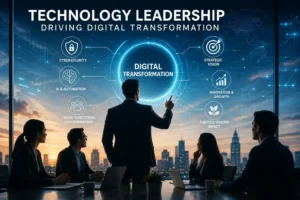
As businesses continue to navigate the complexities of an increasingly digital world, the need for strong technology leadership has never been more critical. Digital transformation is no longer a luxury; it’s a necessity for companies that want to stay competitive, agile, and resilient. However, achieving a successful digital transformation requires more than just adopting new technologies—it requires a comprehensive strategy, strong leadership, and a willingness to adapt to change.
The Importance of Leadership in Digital Transformation
Digital transformation involves integrating digital technologies into all areas of a business, fundamentally changing how it operates and delivers value to customers. This process can significantly enhance efficiency, improve customer experiences, and create new business models. However, the success of these transformations is often determined by the strength of leadership driving the change.
Effective technology leadership is essential for ensuring that the digital transformation process aligns with the company’s overall business strategy. Leaders must not only have a clear vision for how technology can improve the business but also the skills to execute that vision. This involves understanding emerging technologies, managing change, and guiding teams through the complex transitions that come with digital initiatives.
At Evince Consulting, for example, businesses are empowered with the strategic advisory support needed to navigate the challenges of digital transformation. Their focus on leadership development and technology implementation enables companies to scale with confidence, ensuring that technology initiatives are not just implemented, but also embedded into the company’s culture for long-term success.
Building a Future-Proof Digital Strategy
A future-proof digital strategy requires more than just keeping up with the latest trends. It involves a forward-thinking approach that anticipates future needs and proactively addresses them. A critical element of this strategy is cybersecurity. As businesses increase their reliance on digital technologies, the risk of cyber threats grows. Leaders must ensure that cybersecurity is an integral part of the digital transformation plan, safeguarding both data and systems from potential attacks.
Furthermore, the integration of artificial intelligence (AI) and automation into business processes is becoming increasingly important. AI-driven technologies can help businesses optimize operations, predict trends, and enhance decision-making. However, implementing AI requires careful planning and the right leadership to ensure it’s used effectively. Leaders must ensure that AI tools align with the company’s long-term goals and are deployed in a way that maximizes their potential without disrupting operations.
Adopting a holistic approach to digital transformation also means involving all departments in the process. Technology isn’t just the responsibility of the IT department—it affects every aspect of the business. By fostering cross-functional collaboration, companies can ensure that their digital initiatives are comprehensive and integrated across all areas of operation.
The Role of Purpose-Driven Leadership in Long-Term Success
A key aspect of leading a successful digital transformation is purpose-driven leadership. As organizations undergo technological changes, it’s crucial that they don’t lose sight of their mission and values. Leaders must ensure that the adoption of new technologies supports the company’s broader goals, such as enhancing customer satisfaction, improving employee well-being, or contributing to social causes.
Purpose-driven leadership helps businesses create sustainable long-term value. This is particularly important in the context of corporate social responsibility (CSR), where digital initiatives can be used to drive social impact. Soulu, for example, partners with businesses and brands to create community-focused campaigns that not only promote a company’s products or services but also support meaningful causes. Integrating cause marketing into a digital strategy can strengthen a company’s reputation, build customer loyalty, and contribute to a better society.
Through purpose-driven marketing and long-term impact campaigns, businesses can not only embrace digital transformation but also align their technological advancements with broader societal goals. By doing so, they create a more resilient and sustainable business model that is prepared for future challenges.
In conclusion, technology leadership is a critical component of any successful digital transformation. By developing a clear strategy, focusing on cybersecurity, and incorporating purpose-driven goals into the process, businesses can ensure that their digital initiatives lead to long-term success. With the right leadership and a comprehensive approach to digital change, businesses can not only thrive in today’s competitive landscape but also pave the way for future growth and innovation.