
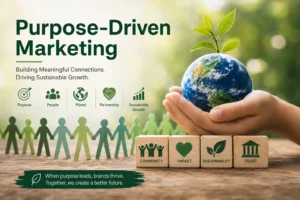
As businesses evolve, the need for authenticity and purpose-driven strategies has never been more evident. Companies are increasingly realizing that success is not solely measured by profits but also by their ability to create meaningful connections with customers, communities, and employees. Purpose-driven marketing, which focuses on aligning business values with social good, plays a pivotal role in this evolution. This approach not only strengthens brand loyalty but also contributes to long-term business sustainability. In this article, we delve into how businesses can leverage purpose-driven marketing to foster sustainable growth.
What is Purpose-Driven Marketing?
Purpose-driven marketing goes beyond traditional marketing by integrating a brand’s core mission and values into every aspect of its strategy. It’s about aligning business objectives with social, environmental, or cultural causes that resonate with both the business and its audience. Instead of focusing solely on products and services, purpose-driven marketing emphasizes the broader impact a company can have on the world.
By focusing on causes such as environmental sustainability, social justice, or community empowerment, businesses can build trust and loyalty among consumers who share similar values. This connection goes beyond transactions—it fosters a deeper emotional bond between the brand and its customers.
For businesses, this strategy is not just about doing good; it’s about doing well in a way that reflects the values of the company and its stakeholders. Companies that integrate purpose-driven marketing into their strategies can differentiate themselves in a crowded marketplace, setting themselves apart from competitors who focus solely on products or profits.
How Purpose-Driven Marketing Contributes to Long-Term Business Sustainability
Sustainability in business refers to more than just environmental practices—it also encompasses social, economic, and cultural dimensions. A business’s long-term sustainability is directly impacted by how it engages with its community, addresses social issues, and contributes to broader causes. Purpose-driven marketing, when executed correctly, is a crucial component of this sustainable business model.
One of the most significant advantages of purpose-driven marketing is the ability to build long-lasting relationships with customers. In a marketplace saturated with options, consumers are more likely to remain loyal to brands that align with their values. Purpose-driven marketing helps businesses engage with customers on a deeper level, not only attracting new clients but also retaining existing ones. These connections lead to repeat business, positive word-of-mouth, and a stronger customer base, all of which contribute to long-term growth.
Moreover, purpose-driven companies often attract top talent. Employees, particularly younger generations, are increasingly prioritizing work that is meaningful and aligned with their values. Businesses that embrace purpose-driven strategies are more likely to attract and retain passionate employees who are committed to the company’s mission. This is a key factor in driving innovation, improving productivity, and enhancing overall company culture.
Furthermore, purpose-driven marketing can open up new opportunities for partnerships and collaborations. By working with like-minded organizations, businesses can expand their reach and amplify their social impact. For instance, platforms like Soulu create opportunities for businesses to partner with charities and non-profits, driving collective action on social causes and broadening the business’s social footprint.
The Role of Cause Marketing in Purpose-Driven Strategies
One of the key elements of purpose-driven marketing is cause marketing, which involves partnerships between businesses and charitable organizations to support a specific cause. This type of marketing helps businesses generate positive social impact while simultaneously enhancing their brand reputation. Cause marketing campaigns can range from donating a portion of sales to a specific charity, supporting community projects, or raising awareness about important social issues.
Cause marketing not only contributes to social good but also reinforces a business’s commitment to its values, demonstrating to customers that the company is genuinely invested in making a difference. By showcasing their involvement in meaningful causes, businesses build goodwill and strengthen their relationship with consumers, which ultimately benefits the company’s bottom line.
One example of effective cause marketing can be seen in the social impact campaigns launched by platforms like Soulu. These campaigns allow businesses to engage in collaborative efforts with charities, creating campaigns that resonate with both their brand identity and the values of their audience. Such initiatives are examples of how businesses can use marketing to support causes they care about while fostering long-term relationships with customers.
To explore more about how businesses can create tailored cause promotional campaigns, visit Soulu.