
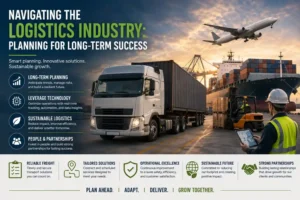
The logistics and freight transport industry plays a pivotal role in ensuring that goods move efficiently and safely across the globe. For businesses, reliable freight transport is crucial not only for meeting customer demands but also for maintaining operational efficiency. As the world of logistics continues to evolve, the need for forward-thinking strategies becomes even more essential. Companies in this space must prioritize long-term planning to remain competitive and adaptable to changes in technology, regulations, and customer expectations.
Long-Term Planning in Logistics: Key to Sustaining Growth
For logistics companies, long-term planning involves more than simply forecasting demand and ensuring capacity. It requires an understanding of broader trends and external factors that might impact the supply chain. For example, changes in regulations, fluctuating fuel costs, and technological advancements can all have a significant impact on logistics operations. By anticipating these changes and incorporating them into strategic planning, companies can avoid disruptions and ensure that they are prepared for future challenges.
A critical aspect of long-term planning in logistics is workforce development. Ensuring that employees have the skills necessary to navigate emerging technologies and evolving business needs is key to maintaining competitiveness. Training and upskilling employees will not only help organizations cope with industry changes but also improve employee retention, which is particularly important in a field where skilled labor is in high demand.
For example, Ashva Group, an Australian logistics company based in Melbourne, focuses on providing reliable and timely freight transport solutions. The company’s ability to offer tailored solutions through contract and scheduled freight services is a direct result of its long-term strategic planning, which includes understanding market needs and forecasting future demand. The company’s emphasis on reliable services ensures that their clients can count on them in the long term, while also continuously improving operations to stay ahead of the curve.
Leveraging Technology to Enhance Logistics Operations
One of the driving forces behind the evolution of the logistics industry is technology. From route optimization to fleet management, advances in technology have significantly improved efficiency and safety in freight transport. For companies to remain competitive, it is vital to invest in and leverage these technological advancements.
Technology also plays an important role in improving transparency and customer experience. By providing real-time tracking and predictive analytics, logistics companies can offer better service, improve delivery times, and enhance communication with customers. Additionally, automating repetitive tasks allows businesses to focus on higher-value activities that require strategic thinking, such as expanding their service offerings or optimizing their supply chain.
As the logistics industry continues to adapt to these technological shifts, businesses must consider how to integrate new systems into their existing operations. This requires a balance of innovation and practicality to ensure that technology enhances rather than disrupts core operations.
Planning for Sustainability in the Logistics Sector
Sustainability is becoming an increasingly important consideration in logistics. With growing pressure from consumers, governments, and stakeholders, companies are expected to not only reduce their environmental impact but also adopt sustainable business practices that benefit society as a whole. Sustainable logistics practices can involve optimizing routes to reduce fuel consumption, adopting electric vehicles, and using more eco-friendly packaging.
Long-term planning in logistics must consider environmental responsibility as a central element. By focusing on sustainable practices, companies can reduce costs in the long run, improve their public image, and contribute positively to their communities. This aligns with broader trends seen across industries, where sustainability is no longer a trend but a requirement for long-term success.
Incorporating sustainability into logistics operations also provides an opportunity for businesses to engage with consumers on a deeper level. Many customers today are making purchasing decisions based not only on price and convenience but also on how businesses approach social responsibility. By promoting sustainability initiatives, companies can differentiate themselves in a competitive market, demonstrating their commitment to positive change.
For example, incorporating purpose-driven marketing into logistics campaigns can build brand loyalty and foster a sense of community. When a company aligns its operations with social or environmental causes, it helps build a deeper connection with its customers, employees, and the wider community. Businesses that integrate such values into their core operations often see stronger customer retention and employee satisfaction.
In conclusion, the logistics industry is facing new challenges and opportunities that require forward-thinking strategies. By focusing on long-term planning, leveraging technology, and embracing sustainability, companies in this sector can build a resilient, efficient, and socially responsible business model. For further inspiration on building purpose-driven campaigns, visit Soulu, a platform focused on creating long-term social impact through meaningful advocacy.