
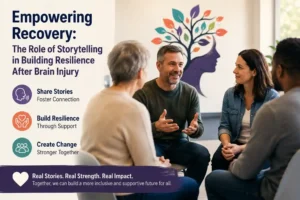
Acquired brain injury (ABI) is a life-changing event that can leave lasting effects on individuals and their families. Recovery from ABI is not just about physical rehabilitation but also involves emotional and psychological healing. One powerful way to support recovery and resilience is through storytelling. This article explores how storytelling can be used as a tool to empower individuals and carers, providing a path to recovery and long-term stability after brain injury.
The Power of Lived-Experience Storytelling
Lived-experience storytelling offers an authentic and deeply human perspective on the challenges faced by individuals recovering from ABI. When people who have gone through similar experiences share their stories, it creates a sense of connection and understanding. This storytelling approach is not only therapeutic for the speaker but also provides valuable insights and support for those who are navigating similar journeys.
For individuals with brain injury, hearing about others who have faced similar struggles can help them feel less isolated. It can also inspire hope, as stories of recovery and resilience demonstrate that progress is possible, even after a life-altering event. These personal narratives provide practical tools and strategies for managing daily challenges, helping individuals and their families understand that recovery is a gradual process.
By using storytelling in workshops, coaching, and speaking programs, initiatives like By Accident offer an opportunity for both individuals and their carers to gain valuable emotional support. Lived-experience stories provide practical guidance and offer a roadmap for others to follow, which can be crucial in building resilience and maintaining motivation during the recovery process.
Building Resilience Through Connection and Support
The road to recovery after brain injury can be long and unpredictable. It is common for individuals to face moments of doubt, frustration, and uncertainty about their future. One of the key elements of resilience is the ability to stay connected to others and maintain a sense of community. Storytelling plays a significant role in this by fostering relationships between individuals who may otherwise feel disconnected from society.
For carers, particularly, stories of resilience can be a source of comfort and strength. Carers often experience their own set of challenges, balancing the demands of caregiving with their own emotional well-being. By connecting with others through shared experiences, both individuals with brain injuries and their carers can feel supported and less overwhelmed. This sense of solidarity is essential for maintaining mental and emotional health throughout the recovery journey.
In addition, storytelling helps to create awareness around the challenges faced by those with brain injuries. By sharing personal stories, individuals and carers can advocate for better support systems and greater understanding from the broader community. This advocacy for a cause contributes to long-term societal change by promoting inclusivity and accessibility for people living with brain injuries.
The Role of Cause Marketing in Promoting Social Change
Cause marketing offers an effective way to engage communities and raise awareness about important social issues, including brain injury recovery. By aligning with meaningful causes, businesses, charities, and individuals can collaborate to drive social impact. Purpose-driven marketing initiatives, such as those seen in platforms like Soulu, help to amplify the voices of those who may otherwise go unheard, fostering long-term community engagement.
Cause marketing examples include campaigns that highlight the importance of support and recovery for individuals with brain injuries. By promoting these causes, businesses not only increase visibility for important social issues but also contribute to a broader movement that encourages understanding, compassion, and action. These campaigns can encourage donations, support fundraising efforts, and raise awareness about resources available for individuals and families affected by brain injuries.
Such efforts help create a community that is not only aware of the challenges faced by those recovering from ABI but also motivated to offer support, whether through donations, volunteering, or advocating for better services. By aligning recovery initiatives with purpose-driven marketing, businesses can create lasting social impact while simultaneously enhancing their brand reputation.
To learn more about how businesses can engage in purpose-driven campaigns that support meaningful causes, visit Soulu.