
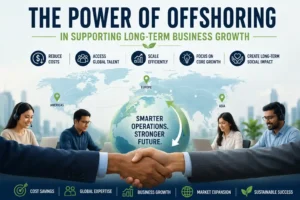
Offshoring has become a strategic advantage for businesses looking to streamline operations, reduce costs, and scale efficiently. By connecting with global talent and outsourcing key functions, companies can not only enhance their operational efficiency but also create long-term growth opportunities. In this article, we explore how offshoring contributes to long-term business sustainability, and how businesses can leverage this model for lasting success.
What is Offshoring and How Does It Work?
Offshoring involves outsourcing business functions or operations to a third-party service provider in a different country, often one where labor costs are lower. Common areas of offshoring include customer service, human resources, IT support, and accounting. By delegating these tasks to skilled professionals overseas, businesses can focus on their core competencies and strategic goals.
One of the main reasons companies opt for offshoring is the potential for cost savings. Labor in certain regions may be significantly more affordable than in others, allowing businesses to reduce their operating expenses. However, offshoring also provides access to a global talent pool, enabling businesses to tap into specialized expertise that may not be available locally.
Offshoring is not limited to cost-cutting; it is also about gaining access to talent and resources that can enhance the business’s capabilities. When done correctly, offshoring can be a win-win for both the company and the outsourced service provider, fostering mutually beneficial relationships that support long-term success.
How Offshoring Supports Long-Term Business Sustainability
Sustainability in business is about more than just financial success; it also involves creating strategies that ensure long-term viability, adaptability, and resilience. Offshoring plays a key role in helping businesses achieve these goals by providing cost-effective solutions that allow companies to reinvest savings into growth initiatives.
By offshoring non-core activities, businesses can allocate more resources toward innovation, research and development, and market expansion. This enables companies to stay competitive and responsive to changes in the market, which is essential for long-term survival. For example, companies that offload administrative tasks to offshore teams can direct their internal resources toward strategic areas such as product development and customer engagement.
Furthermore, offshoring provides businesses with the flexibility to scale operations quickly. As demand grows, businesses can easily expand their offshore teams to handle increased workloads without the need for costly and time-consuming recruitment processes. This scalability is crucial for businesses that operate in dynamic industries and need to remain agile in the face of changing market conditions.
Additionally, offshoring can help businesses enter new markets by providing access to local knowledge and expertise. Offshore teams often have an in-depth understanding of regional markets, consumer behavior, and regulatory environments, which can help businesses tailor their products and services to meet the specific needs of different audiences. This localized approach supports sustainable market growth and long-term success.
Leveraging Cause Marketing for Greater Social Impact
As businesses increasingly focus on long-term sustainability, many are also looking to create positive social change through cause marketing. By aligning their operations with meaningful social causes, companies can enhance their brand reputation, foster customer loyalty, and contribute to broader social good.
Cause marketing involves collaborations between businesses and charitable organizations to support causes that resonate with the business and its customers. This type of marketing not only generates positive social impact but also drives customer engagement by connecting the brand with causes that matter to its audience.
For example, platforms like Soulu create opportunities for businesses to engage in community-focused campaigns that drive long-term impact. These campaigns can help businesses align their values with their audience, strengthening brand loyalty and supporting meaningful causes. Through such partnerships, businesses can demonstrate their commitment to corporate social responsibility, which plays a significant role in their long-term success.
Incorporating cause marketing into an offshoring strategy can further enhance the sustainability of both the business and the communities it serves. By working with offshore teams that share similar values and goals, businesses can create impactful initiatives that resonate on a global scale, reinforcing the importance of collaboration for lasting change.
To learn more about how businesses can engage in purpose-driven marketing and create meaningful impact, visit Soulu.